
Water Damaged Floor Repair Cost: Hardwood, Laminate, Carpet and Subfloor
Quick answer: Water-damaged floor repair costs $200–$5,000 per room depending on the flooring: carpet replacement runs $800–$2,500, hardwood drying/refinishing $1,000–$4,000, laminate replacement $1,500–$4,000, and subfloor repairs add $500–$3,000. The decisive factor is speed — hardwood extracted and dried within 24 hours is often saved; the same floor after a week is usually replaced. Call (888) 245-6962 — free, 24/7 — for a certified assessment.
Floors take water damage first and worst — water pools there by definition. What it costs depends almost entirely on what the floor is made of and how fast drying starts.
Water Damage Floor Repair Cost by Flooring Type
| Flooring | Salvageable? | Repair/Replace Cost (per room) |
|---|---|---|
| Carpet + pad | Carpet sometimes (clean water, fast dry); pad no | $800–$2,500 replaced |
| Solid hardwood | Often, with fast specialty drying | $1,000–$4,000 dried/refinished · $2,500–$6,000 replaced |
| Engineered wood | Sometimes (thin veneer limits sanding) | $1,500–$5,000 |
| Laminate | Almost never once swollen | $1,500–$4,000 replaced |
| Luxury vinyl plank (LVP) | Usually — waterproof, but check beneath | $0–$500 (lift, dry under, relay) |
| Tile | Usually — but grout/subfloor may trap water | $300–$1,500 (regrout/partial) |
| Subfloor (OSB/plywood) | If dried fast; replaced if swollen/delaminated | $500–$3,000 |
Repair or Replace? Signs to Check First
- Cupping: board edges sitting higher than their centers. Often flattens if specialty drying starts within 24–48 hours.
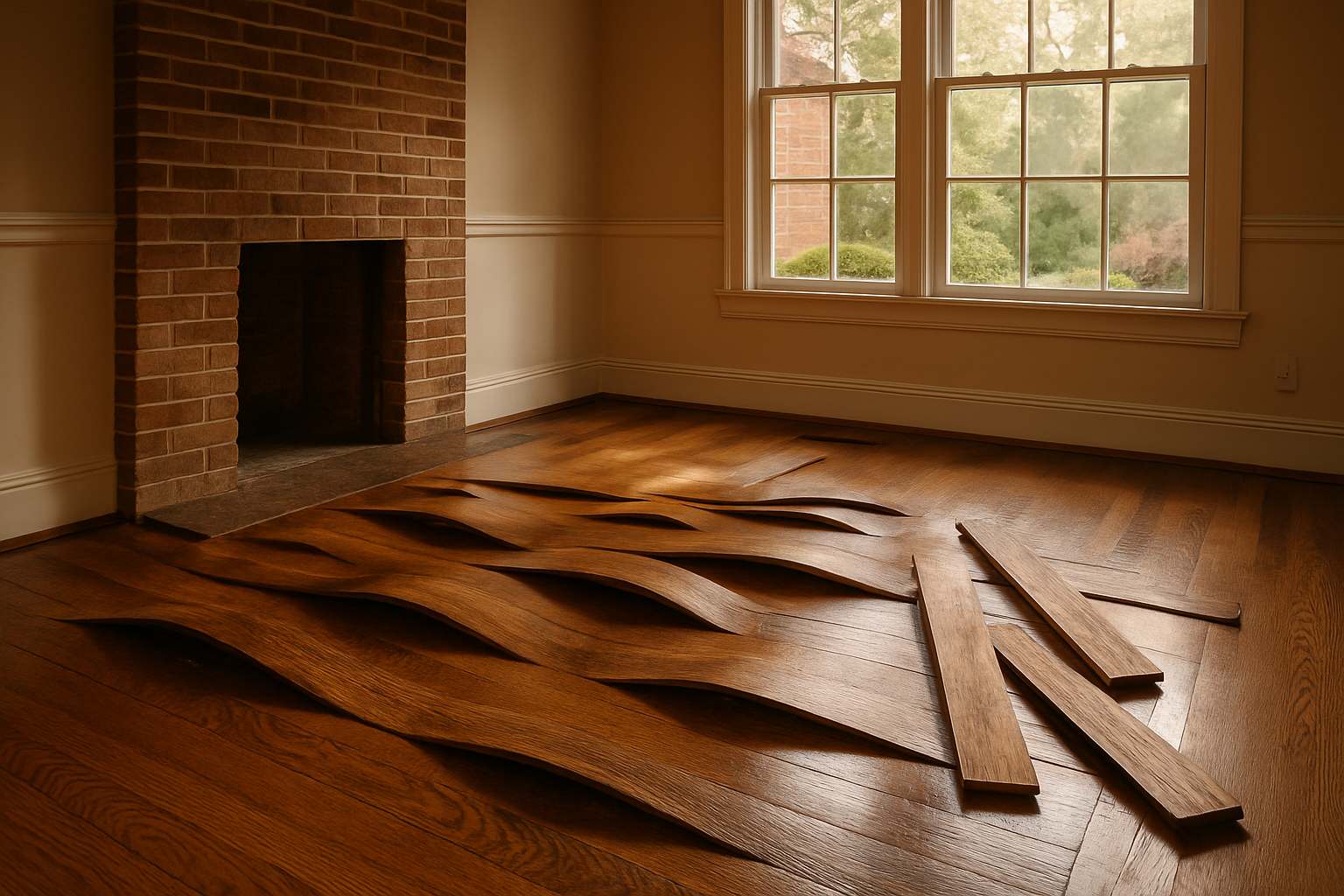
- Crowning or buckling: boards lifting off the subfloor. The affected run is usually replaced.
- Swollen seams on laminate: almost never recoverable once swollen.
- Soft or springy spots underfoot: a sign the subfloor may be wet too.
- A musty smell: moisture is trapped somewhere, often under the floor.
Wood Floor Water Damage Repair Cost
Wood is the flooring where the repair-or-replace call is genuinely close, and it is priced differently from everything else. Hardwood floor water damage repair cost runs $1,000–$4,000 when the boards can be dried in place and refinished, against $2,500–$6,000 to tear out and replace the same floor. Engineered wood lands at $1,500–$5,000 and is the harder case: its thin veneer tolerates only one sanding, so swollen seams or delamination usually mean replacement rather than refinishing.
What decides it is the drying window and the shape of the damage. Cupping — board edges sitting higher than their centers — is the normal first stage in a wet wood floor, and it frequently flattens with specialty mat drying started inside 24–48 hours. Crowning and buckling, where boards lift off the subfloor, mean the floor has moved past what refinishing can correct and the affected run gets replaced. Under about a week of soak, drying is usually the cheaper outcome; past that, replacement wins on both cost and result.
The Hidden Layer: What's Under the Floor
The flooring you see is half the story. Water that reached the subfloor is the expensive scenario — swollen OSB loses structural integrity and must be cut out and replaced before any new flooring goes down. And "waterproof" floors like LVP and tile can trap water underneath, where it feeds mold invisibly. This is why professionals lift a plank or pull a register to meter what's below before declaring anything dry. A floor that "dried fine" over a wet subfloor becomes a mold and buckling problem in month two.
What to Do in the First 24 Hours
- Stop the water at the source if you can do it safely, and cut power to the affected area if there is any risk of electrical contact.
- Photograph the water line and the flooring type before any demolition. Your claim needs it.
- Remove rugs, furniture and loose items so the floor can be reached and dried.
- Call a certified pro for drying. Hardwood dried with specialty mats within 24–48 hours is frequently saved; every hour counts.
Save vs. Replace: How the Call Gets Made
- Speed: hardwood dried with specialty mats within 24–48 hours is frequently rescued; cupping that hasn't cracked can flatten as it dries. After a week of soak, replacement wins.
- Water type: contaminated water (sewage, outside flooding) ends the conversation for carpet, pad, and laminate — removal is mandatory (why).
- Extent: partial repairs to hardwood and tile can look mismatched; insurance often covers reasonable matching of continuous flooring — push on this in your claim.
Does Insurance Cover Floor Water Damage?
Yes, when the cause is sudden and accidental — and floors are usually the biggest line item on those claims. Two claim tips specific to floors: photograph the water line and the flooring type before demolition, and if the damaged flooring runs continuously into other rooms, ask about matching coverage — many states require insurers to account for reasonable uniformity rather than leaving you a two-tone floor. Details: Insurance Guide.
Floor Water Damage FAQ
- Is it cheaper to repair or replace a water-damaged floor?
- Under about a week of soak, drying is usually the cheaper outcome; past that, replacement wins on both cost and result. Contaminated water (sewage, outside flooding) makes removal mandatory for carpet, pad and laminate.
- Does homeowners insurance pay for water-damaged floors?
- When the cause is sudden and accidental, usually yes, and floors are often the biggest line item. Photograph the water line first, and ask about matching coverage if the flooring runs continuously into other rooms.
- How do I know if water got under my floor?
- Cupping or crowning boards, seams swelling on laminate, hollow sounds on tile, movement underfoot, or a musty smell. A moisture meter through a lifted plank or floor register answers it definitively.
- How much does wood floor water damage repair cost?
- Hardwood dried in place and refinished runs $1,000–$4,000; full tear-out and replacement runs $2,500–$6,000. Engineered wood runs $1,500–$5,000 and is replaced more often than refinished, because its veneer can only be sanded once.
- Can buckled hardwood floors be fixed?
- Mild cupping often flattens with professional drying. Buckling — boards lifting off the subfloor — usually means replacement of the affected run.
- How long does floor drying take?
- 3–7 days with mats and dehumidifiers, verified by moisture readings. Rushing new flooring onto a damp subfloor is the classic repeat-failure.
- Should I replace with the same flooring?
- In flood-prone rooms (basements, baths, laundry), consider LVP or tile this time — same look, dramatically better water tolerance.
Wet floors right now? Every hour counts for salvageability. Call (888) 245-6962 — free, 24/7. Related: Water Damage Repair Cost · Basement Water Damage · Insurance Guide · Water Damage Categories · Cost Guide hub